
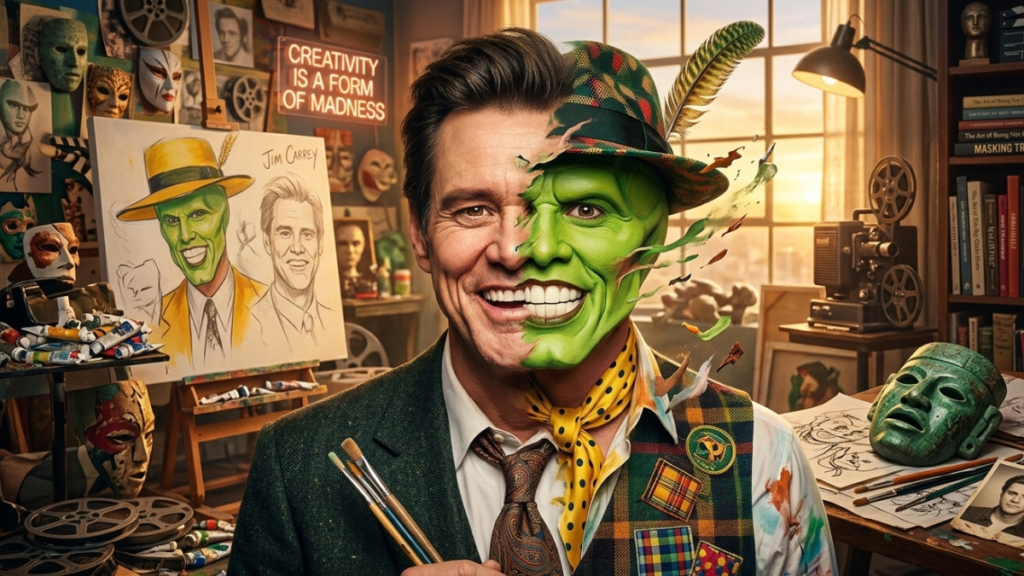
Jim Carrey and the Mystery of Mask Mythology
Introduction – The Smile That Hid a Secret
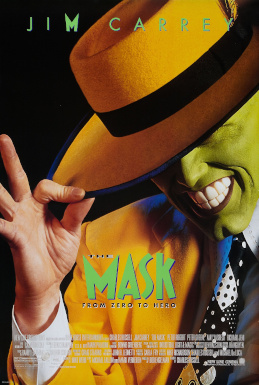
In 1994, Jim Carrey didn’t just play a character — he became a living cartoon.
But beneath the green face and yellow zoot suit, The Mask carried a mythology far deeper than most audiences realized.
The film was a massive success. A sequel seemed inevitable. Yet the one thing audiences expected never happened — Jim Carrey never returned.
Why?
The Immediate Aftermath of Success
When The Mask became a box-office phenomenon, New Line Cinema naturally explored sequel ideas. Hollywood logic is simple: if it works, expand it.
And The Mask didn’t just work — it exploded. Made on a budget of roughly $18–23 million, the film went on to earn more than $350 million worldwide, with about $119 million coming from North America alone. For a mid-budget comedy with heavy visual effects in 1994, that was extraordinary. It didn’t merely turn a profit; it multiplied its investment many times over.
At the same time, Jim Carrey was dominating the box office. In that same breakthrough year, he starred in Ace Ventura: Pet Detective and Dumb and Dumber, both of which became major commercial successes. Within months, Carrey transformed from television comedian to one of the most bankable stars in Hollywood. By the mid-1990s, he was commanding record-breaking salaries and carrying films almost entirely on his name.
From the studio’s perspective, the math was undeniable. A proven concept. A global audience. A rising superstar at the center. The ingredients for a sequel were already in place, and the financial incentive was overwhelming. Lightning, it seemed, could absolutely strike twice.
A Pattern: Selective Sequels
One common assumption is that Carrey simply avoided sequels. That isn’t entirely accurate. He returned for Ace Ventura: When Nature Calls and later for Dumb and Dumber To. So he was not opposed to sequels in principle.
What mattered to him was inspiration.
Throughout his career, Carrey has emphasized that he doesn’t revisit characters unless he feels there is something new to explore. Repeating a performance without evolution risks diminishing what made it special. For an actor whose style depends on spontaneity and exaggeration, creative freshness is everything.
If the sequel script doesn’t feel stronger — or at least different — the magic can fade.
A Pattern: Selective Sequels
One common assumption is that Carrey simply avoided sequels. That isn’t entirely accurate. He returned for Ace Ventura: When Nature Calls and later for Dumb and Dumber To. So he was not opposed to sequels in principle.
What mattered to him was inspiration.
Throughout his career, Carrey has emphasized that he doesn’t revisit characters unless he feels there is something new to explore. Repeating a performance without evolution risks diminishing what made it special. For an actor whose style depends on spontaneity and exaggeration, creative freshness is everything.
If the sequel script doesn’t feel stronger — or at least different — the magic can fade.
The Sequel That Proved Him Right
Comedy sequels are notoriously difficult. What shocks and delights the first time can feel forced the second. The exaggerated cartoon physics, the rapid-fire gags, the iconic “Cuban Pete” energy — all of it worked because it felt new.
A sequel risked turning innovation into imitation.
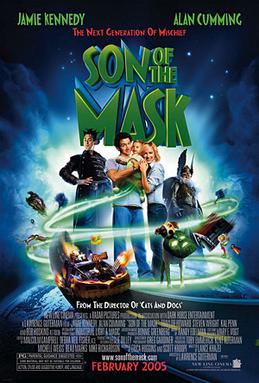
That risk became clearer more than a decade later when Son of the Mask was released without Jim Carrey. The mythology was expanded, the special effects were bigger, and the Loki concept was pushed further — yet the result fell flat with audiences and critics alike. Made on a reported budget approaching $100 million, the film earned only around $60 million worldwide. Instead of building the franchise, it stalled it completely.
The difference wasn’t just financial — it was tonal. The original The Mask balanced chaos with charisma. Carrey’s physical performance gave the madness rhythm and personality. Without him, the exaggerated world felt louder but emptier. The spectacle remained, but the spark was missing.
In hindsight, Carrey’s refusal to return looks less like avoidance and more like strategic foresight. By stepping away, he avoided attaching himself to a sequel that might have diluted the magic of the original. The failure of Son of the Mask unintentionally validated his decision.
Conclusion – Strategy, Not Ego
It is easy to label the decision as ego. After all, Hollywood thrives on spectacle and sequels. But the pattern of Jim Carrey’s career suggests something more calculated.
He returns when there is evolution. He steps away when there is repetition.
The Mask remains iconic partly because it was never diluted by an uninspired continuation. The green grin lives in cultural memory exactly as it was — explosive, fresh, and untamed.
And perhaps that is the final irony of mask mythology.The man who played a character without restraint chose restraint in real life — and in doing so, protected the legend.
Any Return of The Mask Sequel?
Over the years, Jim Carrey has made it clear that he isn’t permanently against revisiting The Mask. Around 2020, during interviews while promoting Sonic the Hedgehog, Carrey said he would consider returning to past characters if the script were strong enough and offered a fresh creative angle.
He emphasized that it wouldn’t be about nostalgia or money — it would have to be a compelling story that expands the character in a meaningful way.
So while there is no confirmed sequel in development, Carrey has not completely closed the door. If the right idea emerges, the green grin could return.